
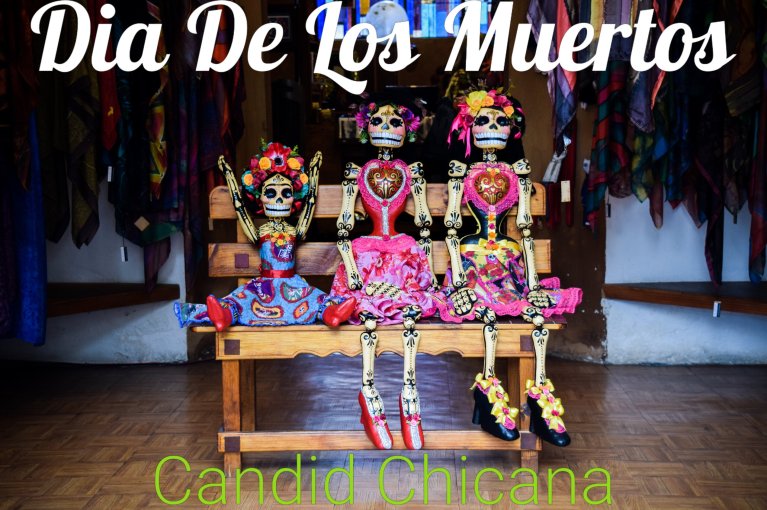
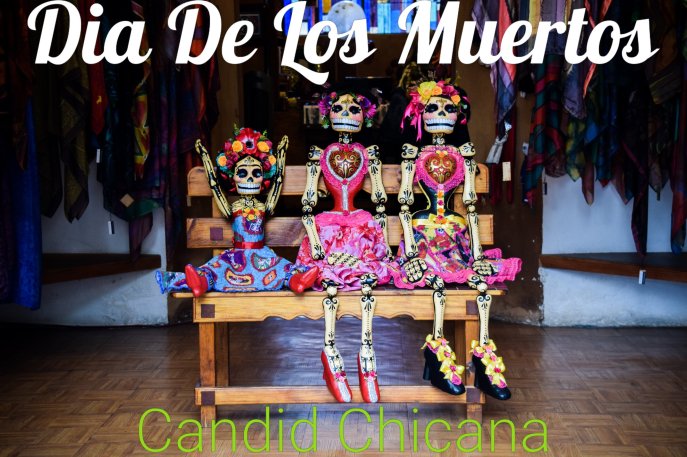
The Day of the Dead celebration in Mexico, “became internationally renowned in the twentieth century.”(Marchi, M.Regina) This celebration focuses on the afterlife of our dearly departed loved ones.
Many scholars agree that several other Latin American countries claim the observance of this celebration as their own as well, each having their own unique variations of the reveranced ritual.
Other countries that celebrate a very similar celebration of the day of the dead, with cultural festivities to honor their dead loved ones are:
- Ecuador
- Bolivia
- Nicaragua
- Honduras
- Argentina
- Guatemala
- Panama
It is believed that many influences have contributed to this special celebration.
The Aztec, Mayan, and other Indigenous traditions formerly held festivities in remembrance of their dead 3,000 years ago.
Modern day Mexican Americans (Chicanos) are the largest Latino group in the United States and make up 60% of the United States Latino population.
Therefore it’s no surprise that Chicanos have adopted their own adaptation of this ritual and magnified this observance with mass media.
This is still largely controversial, some believe the “commodification of the Day of the Dead helps promote community culture, while others believe it is exploitative and corrupting.”
So this celebration has many various aspects and has evolved into a new cultural experience for Chicanos in the United States.
In Mexico the observance is a family and religious ritual carried out in private homes and family gravesites, whereas, in the United States, the observance is held in; art galleries, schools, libraries, museums, community centers, and municipal institutions.
Basically, in Mexico, they hold more traditional and reverence type ceremonies, and in the U.S. more socio-political and culturally influental type ceremonies are conducted.
In Mexico the family of the deceased
- Clean up their family grave sites. Paint and refurbish the headstones and crosses.
- Construct shrines for their deceased relatives in their homes.
- Decorate the graves with: flowers, wreaths, candles, toy figurines, skulls, and more.
- Prepare their deceased loved ones favorite foods to bring as ofrendas(offerings) to the altar.
- Hold special vigils, prayers, singing, and dancing.
Chicanos have adopted their own way of observing this special reverance and remebrance to our dead. The alters in the United States are as diverse as the event itself.
Chicanos have “radicalized” this traditionally religious ceremony into more of a media ritual used to educate the masses about our cultural identity and to elevate our community’s political expressions.
Chicano artists are the first to “popularize” the celebration in the United States and to, “provide an artistic and ritual framework for others to participate in the celebration.”
Chicanos used both Roman Catholic and Mesoamerican Indigenous symbols to express community identity and express solidarity with other diverse Mexicans, and Chicanos (Mexican Americans).
The U.S. alters frequently honor deceased cultural icons such as Tejana Pop Singer Selena Q. Perez, and many other writers, musicians, artists, filmmakers, actors, political activists, and others are commemorated as the collective ancestors of U.S. Latinos.
Day of the Dead celebrations in the United States reinforce:
- The complicated intersections of cultural identity.
- Political economy
- The mass media
- Consumer culture
These Chicano-style celebrations consist of:
- Art exhibits
- Community altars
- Colorful banners
- Craft workshops
- Street processions
- Streetlight decorations
- Sidewalk art
- Fluorescenf lights
- Arches of flowers
- Poetry slams
- Film screenings
- Performance art
- Other PUBLIC EVENTS
These cultural events draw attention to sociopolitical deaths such as; police brutality, unsafe labor conditions, or dangerous border crossings of brown people. They “invoke a moral economy” form of SOCIAL PROTEST.
Dia de los Muertos in the U.S. has created a media platform to transmit political messages across pulpits of radio, television, film, internet, literature, magazines, and more. Thus aiding in educating the public about this very ancient cultural and relevant event.
“Given that Latinos have historically been underrepresented in the U.S. News and advertising, and negatively portrayed in television and film, media coverage of Day of the Dead is an important form of mainstream visibilty.”
One article states that, “While many contemporary Mexican Americans are familiar with El Dia De Los Muertos, many others have only recently begun to learn about it and others know nothing about it.”
This is true for me personally . I have only had a vague idea and understanding of this cultural observance for years, up until two years ago.
Since I lost my papi in 2016, and that hurt me so much, I wanted to know more about this peculiar little celebration. I mean I’ve always been a little odd anyway just in general, because I’m a little morbid and often think about death. But I just thought it was a weird Deanna thing. I guess it turns out to be a normal Mexican thing.😁
Last year I did create my own little version of an altar to honor my papi. Obviously I didn’t know much about it and so hopefully papi was proud of my effort. I learned that I didn’t have all three tiers to an altar, I was missing the Day of the Dead flower, and lots of other things. But I tried! And ultimately I was pleased.
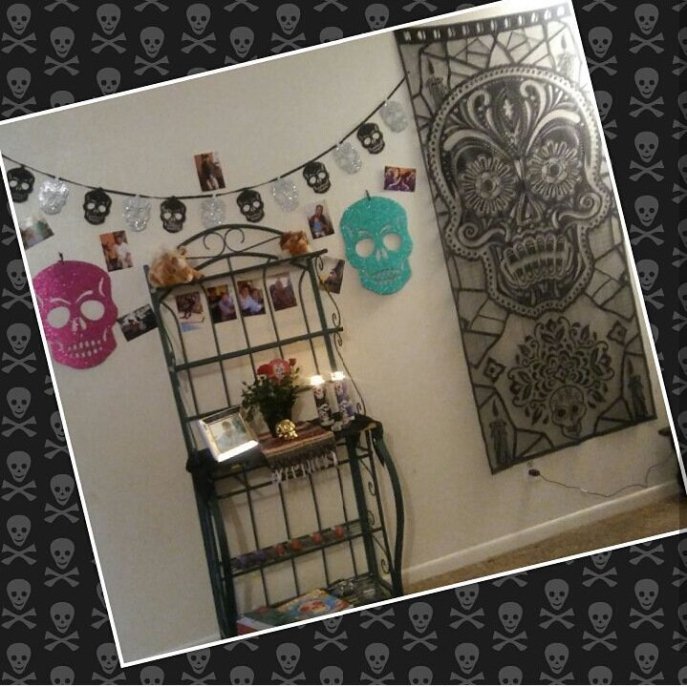
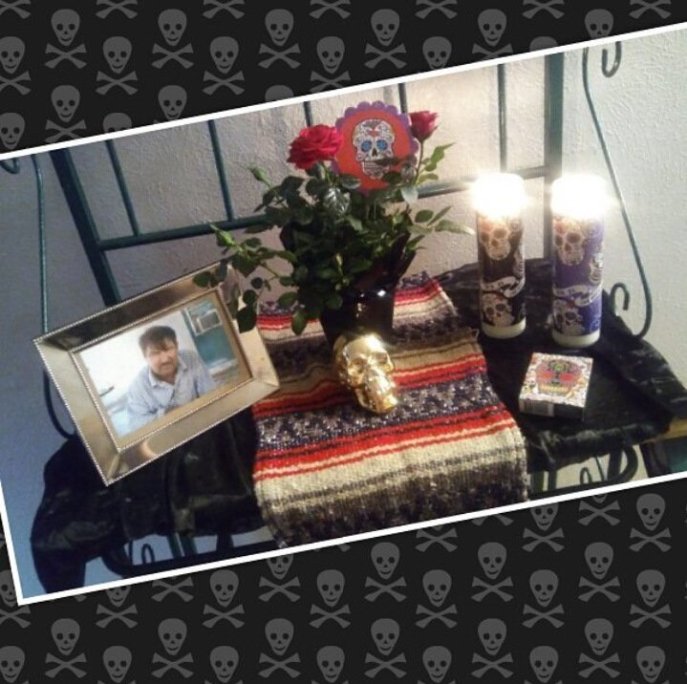
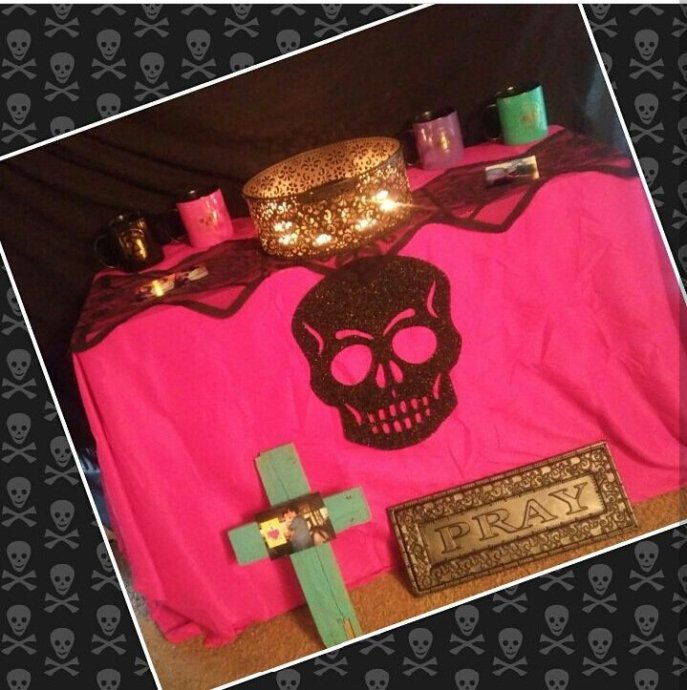
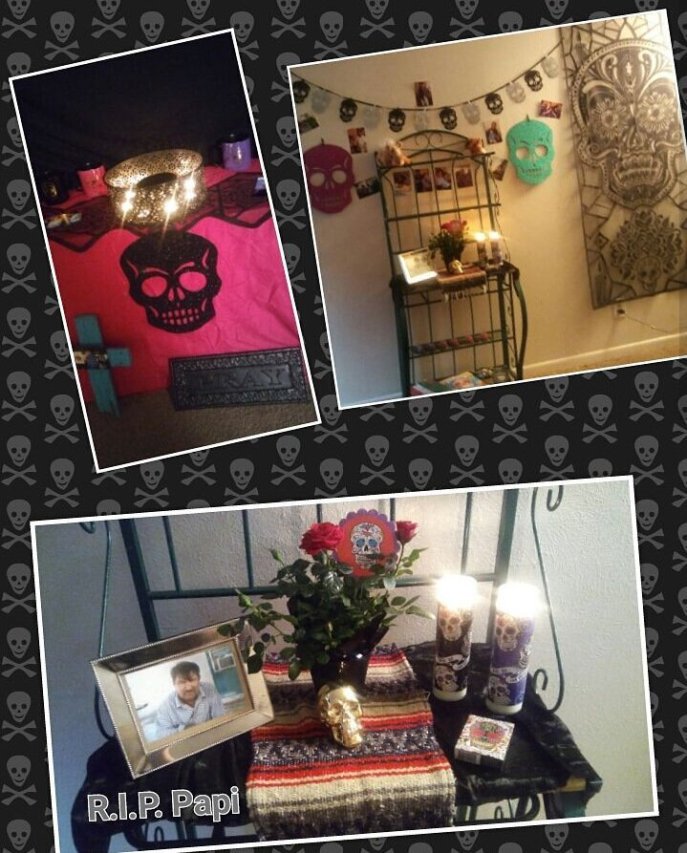
I’ve since learned more about this special Day of the Dead celebration. And I’m sure there is still so much that I don’t know. All I can do, is continue to learn more.
And this year I am here with my family in my hometown during Dia De Los Muertos. It’s a little more special because I get to go with my family to decorate my papi’s grave. And create a shrine in our home.
So hopefully today I’ve taught you a little more about that peculiar little celebration known as DIA DE LOS MUERTOS, DAY OF THE DEAD.
Works Cited:
Marchi, M. Regina, Day of the Dead in the USA: The Migration and Transformation of a Cultural Phenomenon, Rutgers University Press, 2009.
Photo Credit: Unsplash.Valeria Almaraz
Photo Credit: Deanna G. Montalvo photos
 Candid Chicana Chronicles
I lov the sugar skull☠💀n el dia de los muertos
LikeLiked by 1 person
Yes. All the crafts and festivities are so fun and colorful. 💀☠💀☠
LikeLike