
Once you accept an idea it’s an idea whose time has come
-Dr.Robert Anthony
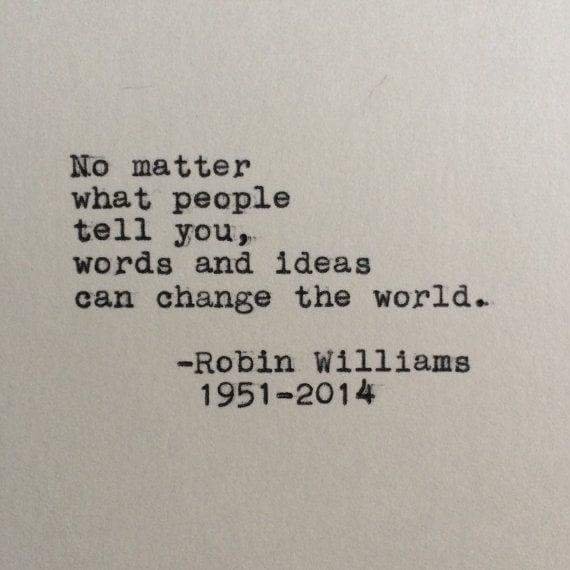
Photo Credit:Thinking Minds
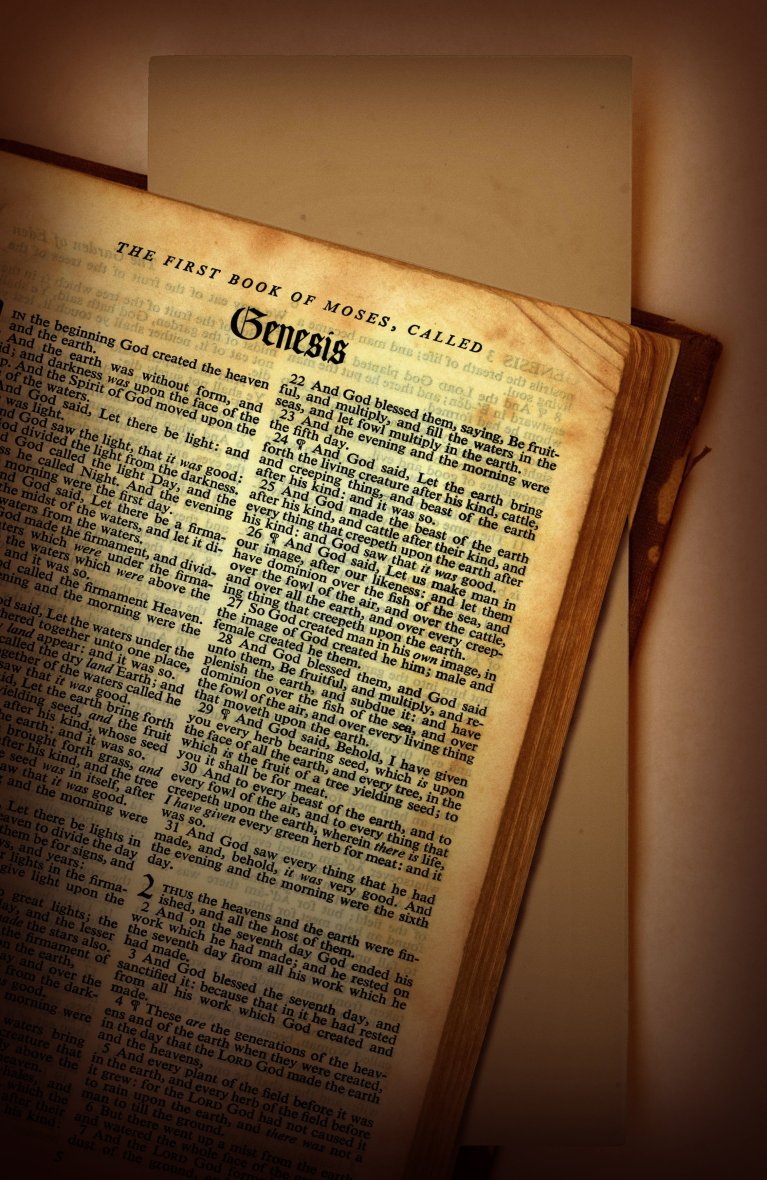
Last Monday I was working on my Bible devotional: Listening For The Voice Of God- Growing in Faith Every Day. It’s a Women of Faith study guide series about discernment. I was initially inspired by the depiction that, “God was the Master Designer and Artist”. And that, “The first chapter of Genesis tells the story of creation. One of the greatest wonders of the story of creation is that God created with mere words.” And “With syllables, God spoke and creation happened.”
Is that not remarkable? How God created things into existence with HIS voice and HIS words! Ok I know some of you are rolling your eyes. My atheist friends, especially you! But you’re my friends, so you love me and support my craft. 😗
The creation story is really inspirational to me because I see myself as a very creative person with endless ideas. I aspire to create written works and perhaps one day become a published author in the children’s literature genre. I also have many other ideas and creations on my mind. Such as a documentary I want to produce. And a few other project ideas. But I like to keep those ideas top secret. 🤑 They aren’t ready to be shared.
Are you a creator too? Perhaps you may find the following information helpful.
Last year, I became interested in researching copyright and trademark laws. Especially because I was about to start my blog and other writing projects . I figured I better read up on some stuff concerning intellectual property.
Honestly, copyright was easier to grasp. Patents and trademarks, were a little more tricky and elaborate for me.
So lets talk about what exactly is intellectual property? And why should you know about IP rights?
Intellectual property refers to creations of the mind: inventions; literary and artistic works; and symbols, names and images used in commerce.
IP is divided into two categories:
- Industrial Property includes;patents for inventions, trademarks, industrial designs,and,geographical indications.
- Copyright Covers literary works (such as novels, poems and plays), films, music, artistic works (e.g. drawings, paintings, photographs, and sculptures) and architectural design.
Rights related to copyright include those of performing artists in their performances, producers of phonograms in their recordings, and broadcasting in their radio and television programs.[wipo.int]
If you are interested in educating yourself in greater depths with patent and trademark laws, allow me to direct you to the website for more substantial and thorough information about IP where you can learn: (check below article for links in reference page.)
- What is Intellectual Property(IP)?
- Understanding Copyright and Related Rights / Understanding Industrial Property
- WIPO Intellectual Property Handbook- A comprehensive guide to the policy, law and use of IP.
The most important thing to remember is that, your “ideas” are NOT protected!
The law specifically states in:
Section 102(b) of the Copyright Act:
IN NO CASE does copyright protection for an original work of authorship extend to any idea, procedure, process, system, method of operation, concept, principle or discovery regardless of the form in which it is described, explained, illustrated, or embodied in such work.(Klems, A. Brian)
Basically in layman’s terms, ideas can only be protected once they have been written, and or created in a tangible form . This is important because this literally means that you must safeguard your ideas. No one needs to know the juicy details until you have created it. Keep your mouth shut with your ideas. Protect them during construction stages. Conceal at all costs!
There have been instances where various persons have inquired about my ideas. I usually give them a limited amount of information about my works, basically a vague and general idea. I smile and tell them I can’t go into detail, because it’s my intellectual property. Perhaps they judge me, but hey, I’m overprotective about my ideas. It’s better to be safe than sorry.
USlegal.com, emphasizes that, “Above all, Intellectual Property (IP) can only work for you if you understand what it is, why you want it, and what you are going to do with it.”
They have given us 10 rules to use as a guide. (Subject to revisions as changes become evident in future years.)
Here they are:
- Get professional help
- Know your (Intellectual Property) Rights
- Think about why you want IP (i.e., What you will actually do with it)
- If you don’t protect the IP your innovation is less likely to happen
- What’s in a name?
- Be realistic about what you can, and cannot, protect
- It’s big business & controversial
- Keep your idea secret until you have filed a patent application
- Trade secrets
- Make sure the IP is owned in a way that allows development
Note these basic terms with definitions;
Copyright: A copyright gives the owner the exclusive right to reproduce, distribute, perform, display, or license his work.
Patent: A patent is the right to exclude others from making, using or selling the invention throughout the United States of America (A limited monopoly granted by the government for the term period of the patent. After the patent expires, anyone may make, use or sell the invention.”
Trademark: Include words, names; symbols, and logos. The intent of trademark law is to prevent consumer confusion about the origin of a product. (USlegal.com)
Ok, all of that probably sounds confusing, and or boring, but if you are still reading, thank YOU! You, as creators, will benefit from this critical information. Even just knowing the basic terms and definitions will greatly benefit you in your artistic endeavors.
One article I came across basically reiterated and enhanced what I learned in my devotional last week. That we are creators because we are a product of the ultimate CRE-A-TOR! The “Master Designer/Artist,” Who is God!
In particular, this article had a section that was geared specifically towards writers & authors. So it caught my attention. This article greatly described what my Bible devotional had touched on, but with a much greater emphasis. The article brilliantly illustrates the power of words. The inspiring way we use words to create, just like our creator.
Here is an excerpt from the article.
Of all three statutory intellectual property regimes, copyright may be most obviously structured around an origins myth, because original creation is the touchstone of copyright protection. The Copyright Act provides copyright protection for “original works of authorship fixed in any tangible expression. “…………An author of a copyrightable work has been laboriously described as having a “creative genius” and as being taken hold of by a “creative spark” Authors reap the “creative powers of their mind” using their “fancy or imagination,” and “intellect.”An author, although left undefined by the Copyright Act, straddles the domains of the human and divine. As a model of human ingenuity, the author “wr[ites] a ‘self” possessing the unique qualities of an individual, owning his words, and thus owning himself. He is nonetheless divinely inspired. The author as a concept began with the author as a vessel for independent, God-like forces. Indeed the metaphor of the author as divinely gifted is an active metaphor in copyright case law. Roberta Kwall has traced this parallel between authorship and God calling it a “mirroring argument,” comparing the first creation narrative in Genesis to wonders of artistic creation:”man’s capacity for artistic creation mirrors or imitates God’s creative capacity.”(Silbey,Jessica M.)
Our human minds are capable of creating fascinating works. Just look at how creations and inventions influence society. Creativity and ingenuity aided astronauts to reach the moon.
The digital and information age have also revolutionized the technology of our modern society. Which has also sparked a new generation of creators including the unrivaled social media innovators .
Anyone and everyone can now create content. So be leery of too many folks knowing all the specific details of your ideas. And research the laws or at least consult with knowledgeable experts.
Works Cited:
Anthony, Robert Dr.,“Think Big A Think Collection” Berkley, Aug 1999.
Feinberg, Margaret., “Listening For The Voice Of God, Growing in Faith Every Day”, Women of Faith Study Guide Series.
Klems A. Brian., “Can You Copyright an Idea?”, Writer’s Digest, July 29,2013
Silver, Jessica M., “The Mythical Beginning of Intellectual Property” (2008) Suffolk University Law School Faculty Published Paper 48, http://Isp.nellco.org/suffolk_fp/48
Websites
https://definitions.uslegal.com/i/intellectual-property
Entrepreneur.com
USlegal.com
Www.wipo.int/about-ip/en/
Photo Credit: Billy Alexander, http://www.freeimages.com
 Candid Chicana Chronicles