You Can’t Be Illegal On Stolen Land

Mexican Heritage, Mexican Man Wearing Sombrero Riding Horse Carrying Mexican Flag
Standard

https://www.facebook.com/share/v/1H3FB5WRoK/

I’m comparting this video to continue to educate the masses. Nelson Mandela said that, “Education is the most powerful weapon which you can use to change the world.

Many people don’t ever question the history they have been taught in the American history books. Teachers use rote memorization techniques to ingrain the information to the students from K-12. Once this repetitive information has been indoctrinated into the masses, no one questions it. Some of us DO know, because we were taught to understand that there are multiple “accounts”, “versions”, of the events that transpired in history. I find it interesting that so much of the brutality parts of history have been either minimized, if not completely omitted entirely.

For example, teaching elementary students that the pilgrims and indians were friends, when we know now, that is entirely false. I mean I had to get to college for a gringo professor to actually tell the class: “Everything they taught you in elementary school about the pilgrims and indians was a lie”. But it’s not like we didn’t already know that. It’s just a shock value, when a Caucasian professor actually TEACHES THE TRUTH across the podium!

In my years of elementary, and secondary education, I always wondered why we were never taught any substantial history about Mexicans, and Mexican History. I would want to know that, because I’m Chicana (Mexican American). I do remember how they always emphasized that Santa Ana sold The Alamo because he had been caught. (Side Eye) But this post isn’t about that specific account. Rather, WHY weren’t we taught hardly anything about our people? I mean, we learned about the genocide of the Native American Indians, and The Atlantic Slave Trade, and The Holocaust, so then……..why weren’t we also taught about the killings that happened in Texas to the Mexican Ranchers/Land Owners? Why was that atrocity specifically left out?

No one in my school ever, NOT ONCE, taught me about that. My father told me about it when I was a young girl, and that is how I knew about it. Now imagine had my father never told me that information, or worse, that I hadn’t paid attention to his words. Then I too, would be one of these ignorant fools, voting against my own interest right now. Why in 2025-2026, don’t we teach our students about the massacres of the Texas Rangers who killed Mexican American men and stole their ranches?

I want to share some tidbits of information on this horrific event that I found on the internet. But I also want to highlight and point out a specific sentence that caught my attention. I’ll share that at the end. Just scan the QR code to access the information about these massacres.

The final paragraph at the end of the blurb is really surprising to say the least. It says:

“This period of history, often ignored in official narratives for a long time, is being brought to light through the efforts of historians and descendants of the victims, notably through the “Refusing to Forget” project. Historical markers have been erected in recent years to acknowledge these events, such as the one for the Porvenir Massacre dedicated in 2018.” 

It’s a start.

But America…..we need to do better. And parents, teach your children your family’s origin stories. Otherwise, they will tell you, that your story is a lie, and that there’s, is the true version.

Another Example: If any of you have ever watched the movie Mi Familia, starring Edward James Olmos, Jimmi Smits, and more, you will remember a scene where the scholarly, nerdy brother, “Memo” who grew up and became a lawyer brings his Anglo fiance’ and her family to meet his very Mexican Family. During this family introductory gathering, the father is telling his story and how his uncle owned the property, the house he lives in, when California was still Mexico. And he proceeds to tell these Anglo’s that the uncle died and was buried in the back yard. But “Memo” who has assimilated into the American Culture tries to deny the family story and says it’s just a “MADE UP STORY” that never actually happened. This is what is happening to our youth, our children. THEY ARE DENYING WHO WE ARE. PARENTS WAKE UP!!!!! DO NOT LET THEM TELL YOU THAT THEIR NARRATIVE, THAT THEIR ACCOUNT, THAT THEIR HISTORY, IS THE ONLY ACCURATE ONE. PLEASE TEACH YOUR CHILDREN YOUR FAMIL’YS ORIGIN STORIES.

I don’t have a problem with the youth adapting into American culture, but to outright deny, or disown your own Mexican Heritage, to assimilate and abandon who made you YOU, is disappointing. This won’t happen if we intervene NOW! When it matters. Teach your children about their apellidos, the families they come from, their family’s lineage, important stuff, and the silly stuff too. It matters.

You’re probably wondering why do I even care? Well, I care…because my father taught me who I really am. While my Spanish might be scoffed at and ridiculed….I was taught to be proud of it and proud to speak it. No one is going to make me ashamed of being born in America, but having Mexican Pride and DNA running all through my veins.
A Story About How Benevolent Giving Impacts Communities

Standard

You will find, as you look back upon your life, that the moments that stand out are the moments when you have done things for others

-Henry Drummond

From The Treasure Chest

Papi use to tell me stories about growing up in poverty in Mexico. I remember how he would chastise and lecture us about our wastefulness.

He would shake his head with disapproval if we were being wasteful, and then would proceed to tell us about his experiences as a young boy in Mexico.

He would tell us that he was so poor that even as a 15 year old boy…he didn’t have shoes to wear. He would get teased and bullied by other kids at school because he didn’t have shoes.

To make matters worse…he would work out in the heat to help abuelito. With no shoes, I can’t even begin to imagine what the hot dirt did to his feet. Blister and burn him for sure.

He would tell us his stories with pride. He knew he had worked hard. They would pay him with livestock. He was giddy about a pig he earned once.

That was how it was back then. People didn’t have money, so…they bartered. They would “borrow” my Papi for field hands and manual labor…but pay him with what they had.

Papi didn’t tell us this because he wanted sympathy or empathy. Rather, he used this as a life lesson to teach us that we should be good stewards of everything we have. If he caught us being wasteful, we would hear about it.

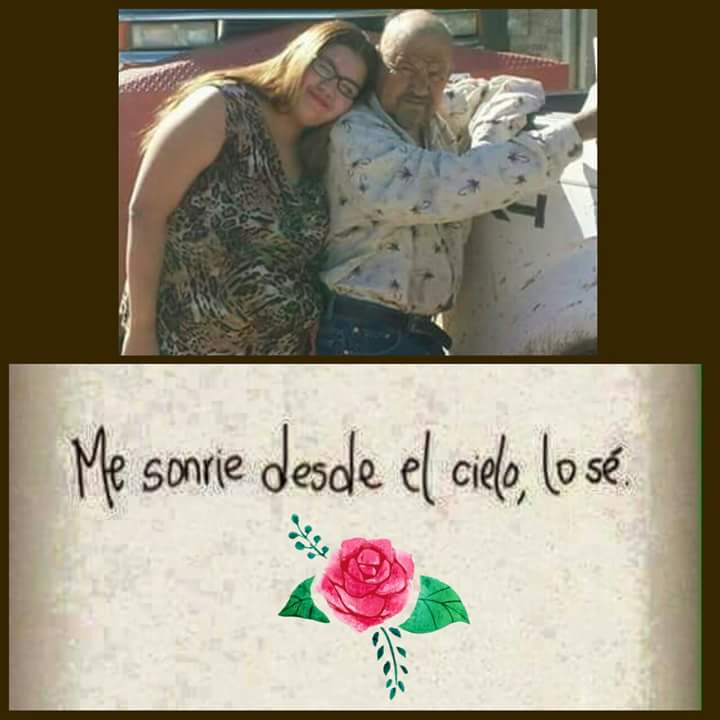
I was blessed to have him as my Papi for 60 years. In those years I have many fond memories. Some of my favorite, are when he would take clothes and supplies to his family in Mexico. He even managed to buy trucks and take them to his brothers in Mexico.

I remember we would put a camper on the truck and load it up with boxes and boxes of clothes in the back.

I even remember when we took the clothes to an impoverished town to deliver the clothes. I will never ever forget what I saw and how I felt.

I saw my Papi calling all the people out to the truck. Papi had left the camper at the rancho. So the people just hopped right on the bed of the truck and began digging through the clothes. Smiling, laughing, and, taking what they could use.

I felt happy to see people were so elated to receive used clothes. I felt proud that my Papi loved his gente so much, and that he had a big heart for giving. He never forgot about his people.

To this day…I am inspired when I see mi gente buying ropa and zapatos y mas to take to Mexico. I work at a thrift store and am lucky to meet many amazing people.

Not just Mexican people, but many other cultures too. I have seen African women buying in bulk to send to Africa. And many others too.

One day a lady came to my register to check out. I struck up a conversation with her and discovered that she was making her purchase as a ministry gift to the impoverished people in remote areas in Mexico.

I got excited when she told me about her planned trip to make the delivery. I was so happy to hear this because it brought back many memories of my trips to Mexico with goods to deliver to familia and the poor.

I asked the lady to take lots of pictures and to please remember to come back and show me. Well several months passed by.

Then one day the lady came back into the store. Honestly, I didn’t think she would come back, although I hoped she would.

She showed me her photos. We talked and we cried. I listened to her tell about her experience and how thankful the people were. She was so impacted by the people that she said she would do another trip.

They asked her for food. But she said it’s very difficult to bring food from US to Mexico because of restrictions. But she wants to raise funds so that when she is in Mexico next time, she can bring them food too.

I have shared her gofund me link after this post so that you can read her story and maybe you will feel led to make a charitable contribution to her personal ministry in helping the poor.

Or perhaps you can just remember to give when and where you can. If you can’t give goods or funds….please….give kindness. Give your time by volunteering when you can.

Kindness is free. But nobody uses it anymore. I am very disheartened by the callousness of people’s hearts and actions these days.

This topic has been on my heart lately. I am not a perfect woman. I make mistakes. But I am proud that I had parents who taught me to give.

Parents that, despite being dirt poor, were able to bless many many people. I pray that I can be as kind a person as my parents. As kind as this good samaritan lady.

God doesn’t look at the size of your giving. He just wants you to give what you can. I learned from one of my favorite books, The Blessed Life, by Robert Morris, that you can’t outgive God. This book has the best teaching on the subject of giving and tithing. I recommend it to everyone any chance I get.

No matter what or how much you contribute, your giving has a positive impact. I pray that God would bless both the givers and the receivers, for we never know on which end we will be.

https://www.gofundme.com/37itjc0

Works Cited:

Morris, Robert. The Blessed Life

Wallis. L. Charles, The Treasure Chest. 1965. Harper & Row Publishers Inc. 49 East 33rd Street ,New York 16, N.Y.

Grito Mexicano

Standard

One of my favorite things to do is listen to rancheras y mariachi music y corridos y tu sabes…….todas las mas chingonas canciones Mexicanas.

It also brings back memories of my childhood when mi mamai escuchaba her favoritos grupos. I remember Los Temerarios, La Mafia, Vicente Fernandez, Yolanda Del Rio, y muchos mas, would be playing on any given morning.

Oh……and the smell of Pinesol! If the musica came on, that meant it was time to stop being a huevona and help mami clean the house.

Music is like a time machine…that only teleports you back to yesteryears. How I wish I could go back to when mi papi was alive. I really would love to see him happy again. And listening to his favorite corridos mas padres!

Some of you know what a Mexican grito is, but many of you may not know. Well I’m not really sure of a technical definition of it but I’ll try to explain it.

A grito is a “yell”,”scream”, or a “shout”that has to be belted out at the perfect time during a song that’s really captivating your entire soul and being.

It’s like the song has hypnotized you and you can feel multiple emotions throughout the song. Like feeling sadness, grief, aching, longing, longsuffering, pain, joy, happiness, valiant, strong, in love yet heartbroken, and more, all during the song.

The song is so powerful that it transcends the person listening and or singing. And I personally think it’s something every Mexican can do and that it was a gift given to us by our ancestors. No te creas! I don’t know…maybe I should go out and do a poll just to test my theory. But really, it’s not so hard, even los kids can do it.

I still listen to rancheras in the car with my own children. And I try to translate as much of the song as I can to my children.

I tell them about practicing their “gritos“, because this is tradition you know. And they must know, that the timing and execution of the grito is critical.

If you have never heard a grito you can search YouTube for some fun videos so you can witness the power of the grito.

So turn the musica on amigos y amigas. Lets pass down this valueable information to our hijas y hijos.